
Introduction
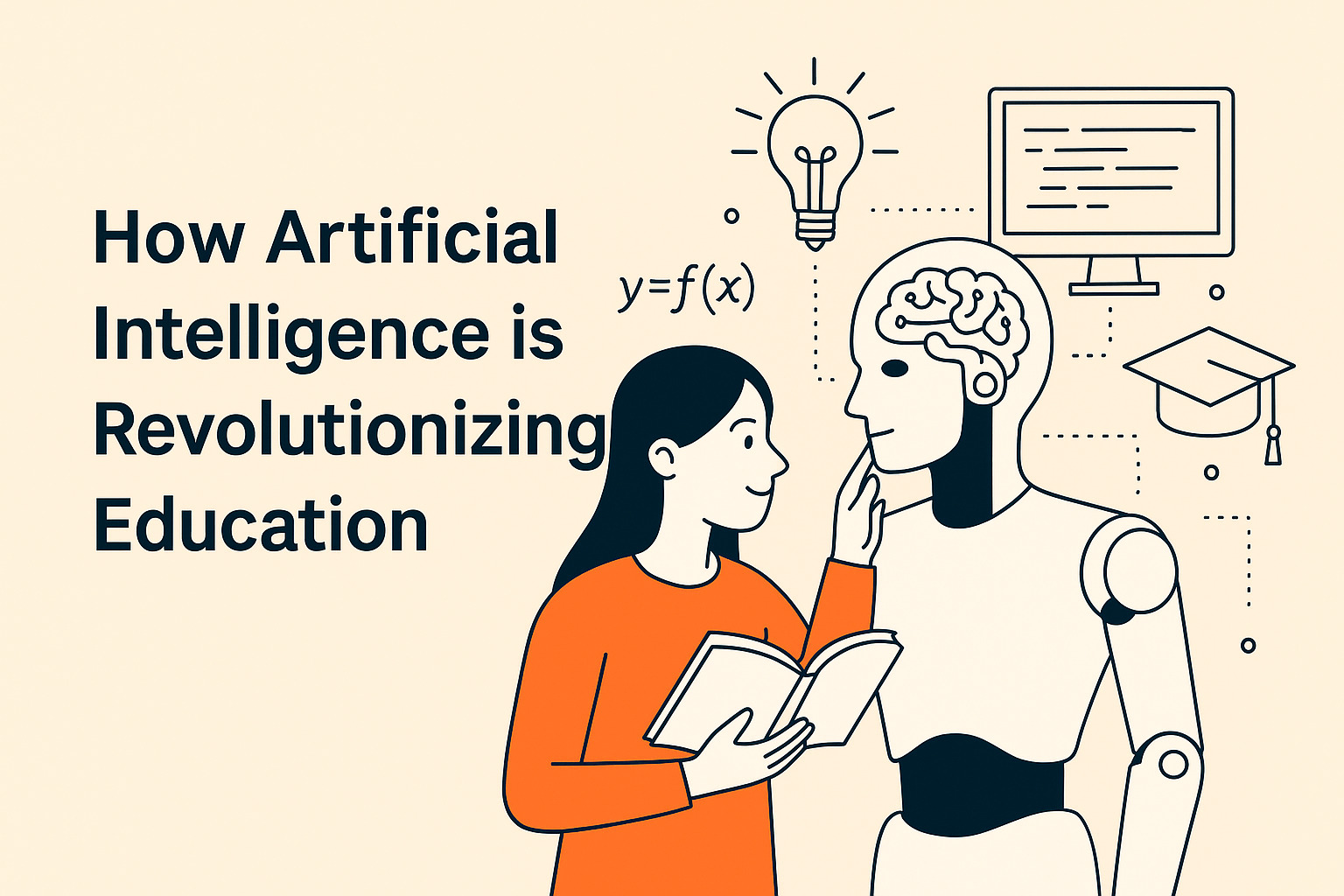
In the 21st century, one of the most transformative technologies reshaping human life is Artificial Intelligence (AI) — the science of making machines think, learn, and make decisions like humans. Once considered science fiction, AI is now embedded in our daily lives. One of the fields experiencing a major shift is education. Traditional classroom-based teaching methods are evolving into personalized, adaptive learning systems, thanks to AI.
The Beginning of a New Era in Education
Gone are the days of passive learning through textbooks and chalkboards. Today, AI enables interactive, data-driven, and personalized education. AI-powered tools such as virtual tutors and intelligent content systems are changing how knowledge is delivered and consumed.
Applications of AI in Education
1. Personalized Learning
AI customizes learning experiences based on student performance and preferences. For example, platforms like Khan Academy and Coursera use AI to suggest lessons based on user behavior.
2. Virtual Assistants and Chatbots
AI chatbots like Duolingo’s AI chatbot help students practice language skills and get instant responses, increasing engagement and 24/7 learning support.
3. Automated Assessments and Feedback
Platforms such as Gradescope use AI to grade assignments quickly and accurately, freeing up educators to focus more on student interaction.
4. Smart Content Creation
AI tools like ScribeSense or even ChatGPT help generate personalized study materials, quizzes, and summaries for students.
5. Language Translation and Accessibility
AI tools like Google Translate and Microsoft Immersive Reader ensure that learners from diverse linguistic backgrounds can access content in their native language.
Advantages of AI in Education
- Accessibility: Remote learners can access top-quality content through platforms like edX.
- Efficiency: AI reduces repetitive tasks for teachers.
- Analytics: Tools like Power BI in Education provide insights into student performance.
- Cost-Effectiveness: Many AI tools are free or low-cost, helping democratize education globally.
Challenges of AI in Education
- Privacy Concerns: Read UNESCO’s data privacy guide for AI in education.
- Digital Divide: The World Economic Forum highlights access inequality among students worldwide.
- Teacher Concerns: The Brookings Institution explores the changing role of teachers due to AI.
Also Read About – Artificial Intelligence: The New Revolution Shaping Our Future
The Future of AI in Education
Combining AI with VR/AR will redefine experiential learning. Innovations like Sora by OpenAI may soon allow students to learn by virtually stepping into historical events or scientific labs.
AI may also recognize emotional states in students and offer personalized motivation or mental health support — as explored in this Harvard EdCast.
Conclusion
Artificial Intelligence is not just changing how we learn — it’s reshaping what and why we learn. From tailored content and virtual mentors to accessibility for all, AI is building a smarter, more inclusive future. However, it must be implemented with care, responsibility, and a human touch.
Explore more at World Economic Forum – AI and Education.
